

Creating a Relationship Timeline: Understanding Patterns, Repairing Relationships, or Healing After Infidelity
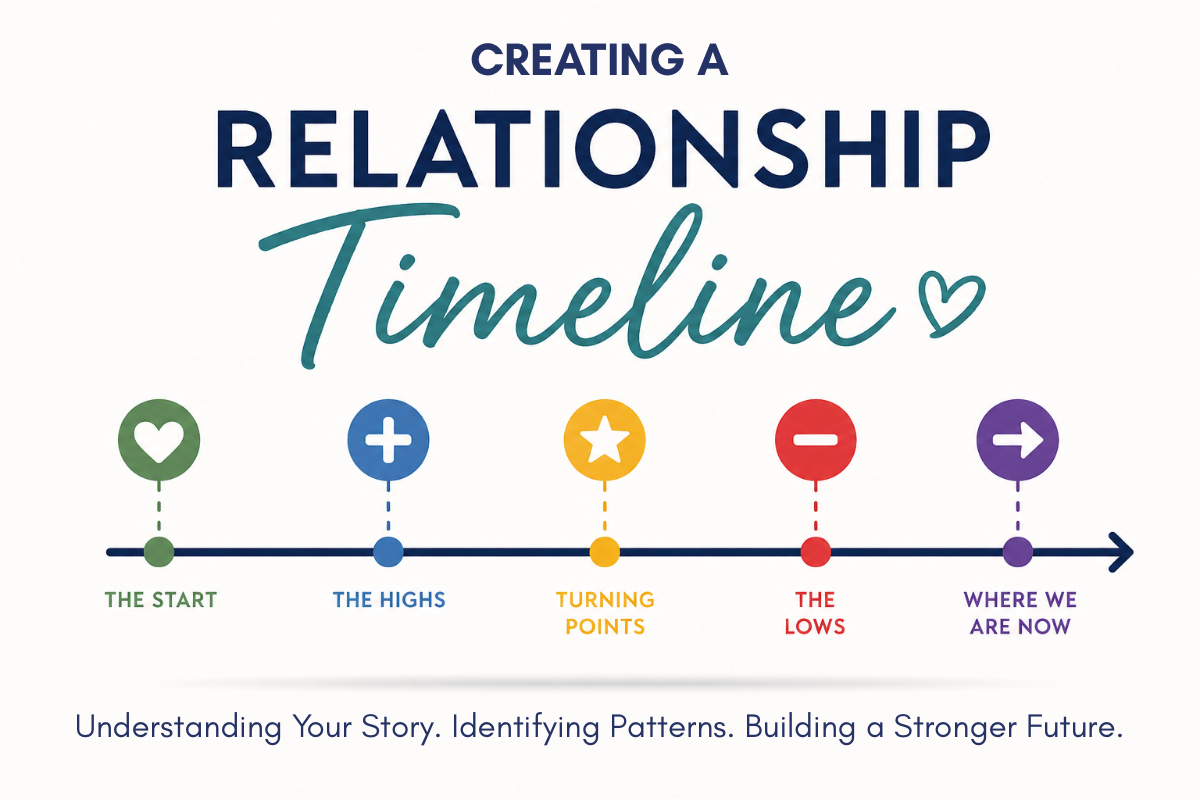
Learn how to create a relationship timeline to identify attachment patterns, improve communication, strengthen relationships, and support healing after infidelity or relationship loss.
Relationships rarely fail because of a single moment. More often, they are shaped by a series of experiences, turning points, and patterns that unfold over time. One of the most effective exercises for understanding those patterns is creating a relationship timeline.
A relationship timeline is exactly what it sounds like: a visual representation of the life of a relationship from beginning to end—or from beginning to the present if the relationship is ongoing. By mapping key events and emotional experiences, individuals and couples can gain insight into what worked, what went wrong, and what still needs healing.
This exercise can be valuable for couples trying to strengthen their relationship, partners recovering from infidelity, and even single individuals who want to understand recurring attachment patterns before entering their next relationship.
Why Create a Relationship Timeline?
When people reflect on relationships, memory often becomes selective. We may focus only on the good times, or we may become consumed by painful experiences and forget the strengths that once existed.
A timeline helps create a more balanced perspective by allowing you to see the entire story. It can reveal:
Repeated conflict cycles
Unmet emotional needs
Attachment wounds
Communication breakdowns
Moments of connection and resilience
Turning points that changed the relationship’s direction
Warning signs that may have been overlooked
Rather than relying on emotion alone, the timeline creates a visual record that can help you identify patterns and themes.
Four Questions to Guide Your Timeline
As you move through the relationship chronologically, answer these four questions.
1. How Did the Relationship Start?
Think about the beginning.
How did you meet?
What initially attracted you to each other?
What hopes or expectations did you have?
What was happening in your life at that time?
Write down major milestones and positive memories from the early stages of the relationship.
2. What Did You Enjoy About the Relationship?
This question helps identify strengths that existed before problems emerged.
Consider:
What made you feel connected?
What needs were being met?
What qualities did you appreciate in your partner?
What experiences brought you joy?
Many couples are surprised to discover that beneath current pain, there were genuine strengths worth acknowledging.
3. When Did Things Start Going Wrong?
This is often the most revealing part of the exercise.
Ask yourself:
When did communication begin to change?
When did resentment first appear?
What disappointments were never resolved?
Were there significant life stressors involved?
Did emotional distance begin before major conflicts?
Rather than focusing on a single event, look for trends. Often, problems emerge gradually long before they become obvious. Read my article Why Do Couples Fight?
4. How Did the Relationship End—or Where Is It Now?
If the relationship has ended:
What finally led to the breakup?
What emotions surrounded the ending?
What lessons did you learn?
If the relationship is ongoing:
Where are you today?
What issues still need repair?
What strengths can help you move forward?
The goal is not to assign blame but to understand the relationship’s full trajectory.
Creating a Visual Timeline
A timeline becomes even more useful when you add visual symbols that represent emotional highs and lows.
Draw a horizontal line across a page.
Mark significant events along the line and use symbols such as:
↑ Up Arrow
Positive experiences
Increased connection
Trust-building moments
↓ Down Arrow
Conflicts
Disappointments
Emotional injuries
+ Plus Sign
Events that strengthened the relationship
Shared successes
Acts of support
− Minus Sign
Events that weakened the relationship
Broken promises
Ongoing stressors
★ Star
Major turning points
Life-changing events
Moments that significantly altered the relationship
♥ Heart
Meaningful experiences of love and intimacy
⚠ Warning Sign
Red flags that may have been ignored
For example:
Meeting ♥ ↑
First vacation together + ↑
Job loss − ↓
Birth of child ★ +
Communication breakdown ⚠ ↓
Emotional withdrawal ↓
Affair discovered ★ ↓↓↓
Beginning counseling ★ ↑
Over time, a visual pattern emerges that often tells a story more clearly than words alone.
How Single People Can Use This Exercise
Relationship timelines are not just for couples.
If you are currently single, create timelines for previous significant relationships. Then compare them.
Look for recurring themes such as:
Choosing emotionally unavailable partners
Fear of abandonment
Avoiding vulnerability
Becoming overly responsible for a partner’s happiness
Difficulty setting boundaries
Repeating rescue or caretaker roles
These patterns often reflect attachment styles that continue from one relationship to another unless they are consciously addressed. Read Why Can’t I Find the Right Mate?
By recognizing recurring themes, you can enter future relationships with greater awareness and intention.
Relationship Timelines and Infidelity Recovery
Relationship timelines are particularly valuable after an affair.
In Janis Abrahms Spring’s book Getting Past the Affair, one of the core ideas is that recovery requires understanding the broader context of the relationship rather than reducing the affair to a single event. [1] While the partner who chose to be unfaithful remains responsible for that decision, healing often involves exploring the relationship dynamics that existed before the betrayal occurred.
A timeline helps couples identify:
When emotional disconnection began
Unresolved conflicts that accumulated over time
Missed opportunities for repair
Patterns of avoidance or withdrawal
Periods of loneliness, resentment, or unmet needs
Importantly, the purpose is not to excuse the affair. Instead, it helps both partners understand the relationship system in which the betrayal occurred.
Many couples discover that the affair itself was not the beginning of the crisis—it was the point at which deeper problems became impossible to ignore.
When used alongside honest communication and professional support, a relationship timeline can become a roadmap for recovery, helping partners understand both the damage that occurred and the opportunities for rebuilding trust.
Final Reflection
A relationship timeline transforms memories into a visible story. It allows couples to see where connection flourished, where problems emerged, and where repair is still needed. For individuals, it can reveal attachment patterns that continue across multiple relationships.
Whether you are working to strengthen a current partnership, recovering from infidelity, or preparing for a healthier future relationship, the simple act of mapping your relational history can provide powerful insight.
Sometimes understanding where you are going begins with clearly seeing where you have been.
I encourage you not only to just read this article, but grab a sheet of blank paper and answer the four reflection questions.
If you would like professional guidance through understanding your relational journey, navigating negative relational patterns, the struggle to overcome attachment difficulties, or if you are in need of recovery from the hurt caused by unfaithfulness, please book a consultation with me today! That single brave phone call can make all the difference.

June 14, 2026
Written by Dr. James E. Francis Jr.
*Image and some text generated with the assistance of AI technology.
Dr. Francis is the founder of Intentional Bridges, a mental health counseling and coaching practice that provides accountability through encouragement and empowerment that drives resilience and spiritual maturity. James helps with issues including anxiety, anger, depression, grief, infidelity, life transitions, stress, marital readiness, men’s issues, relationship issues, race-related issues, pornography addiction, PTSD, and trauma. He believes that therapy should be clinically excellent and theologically accurate. He prioritizes the integration of Scripture with elements of psychology to operate a holistic growth plan. James helps individuals identify and overcome their negative core beliefs. Then walks beside them to promote step-by-step healing from the pain of the past.
.